Margarita Fainshtein
The Dinner of Sublimation
Art Cake, Brooklyn
June 6 – 28, 2026
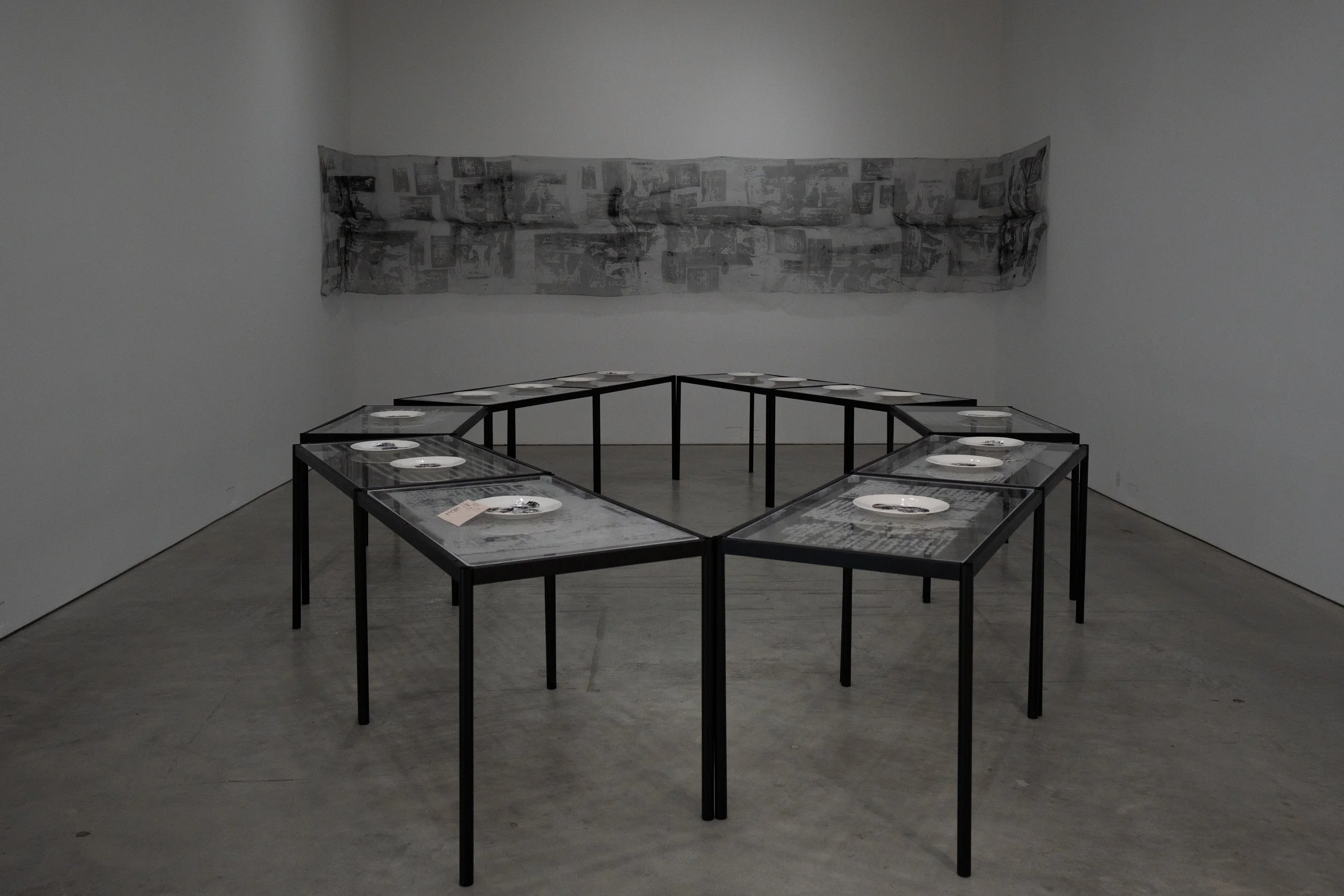
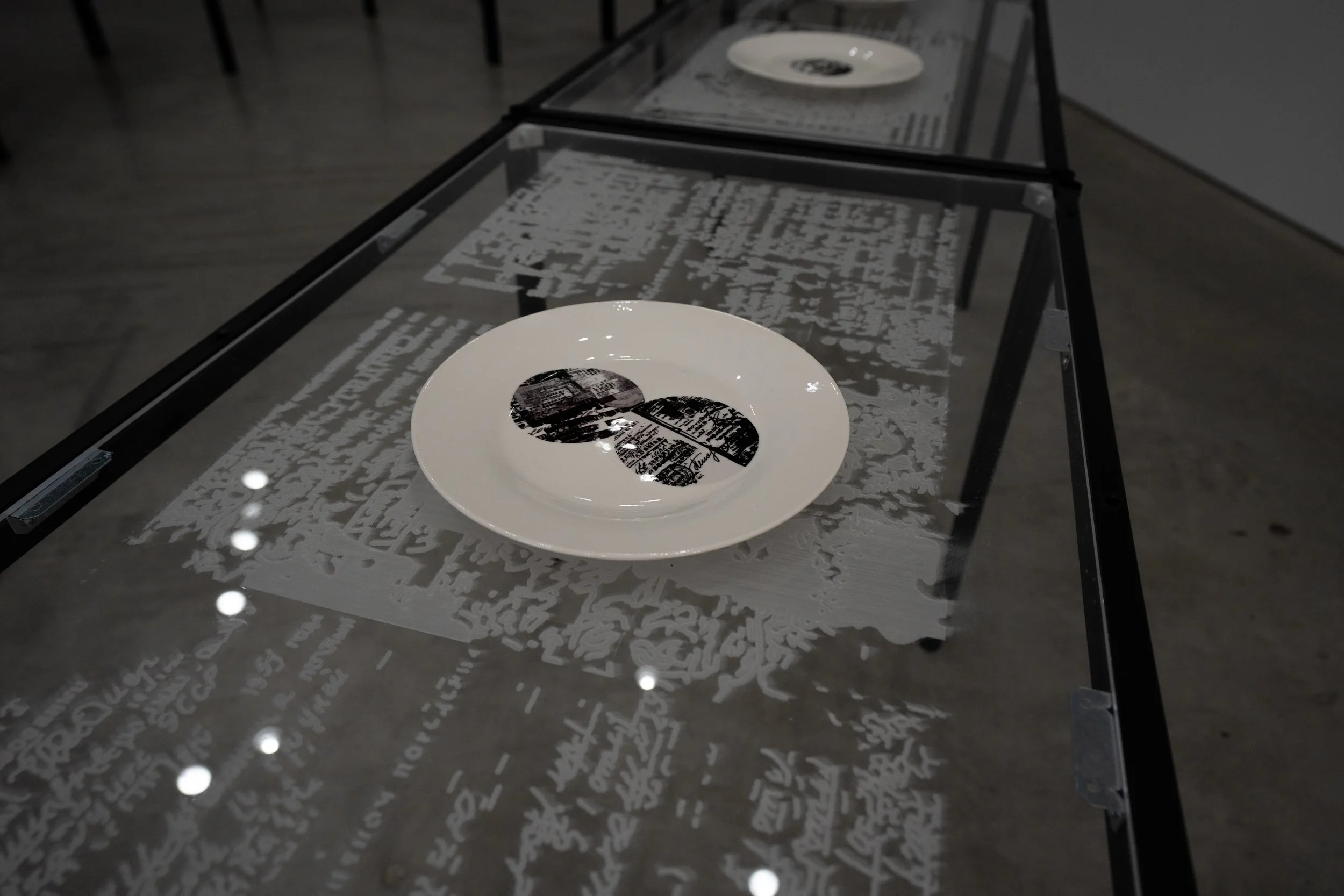
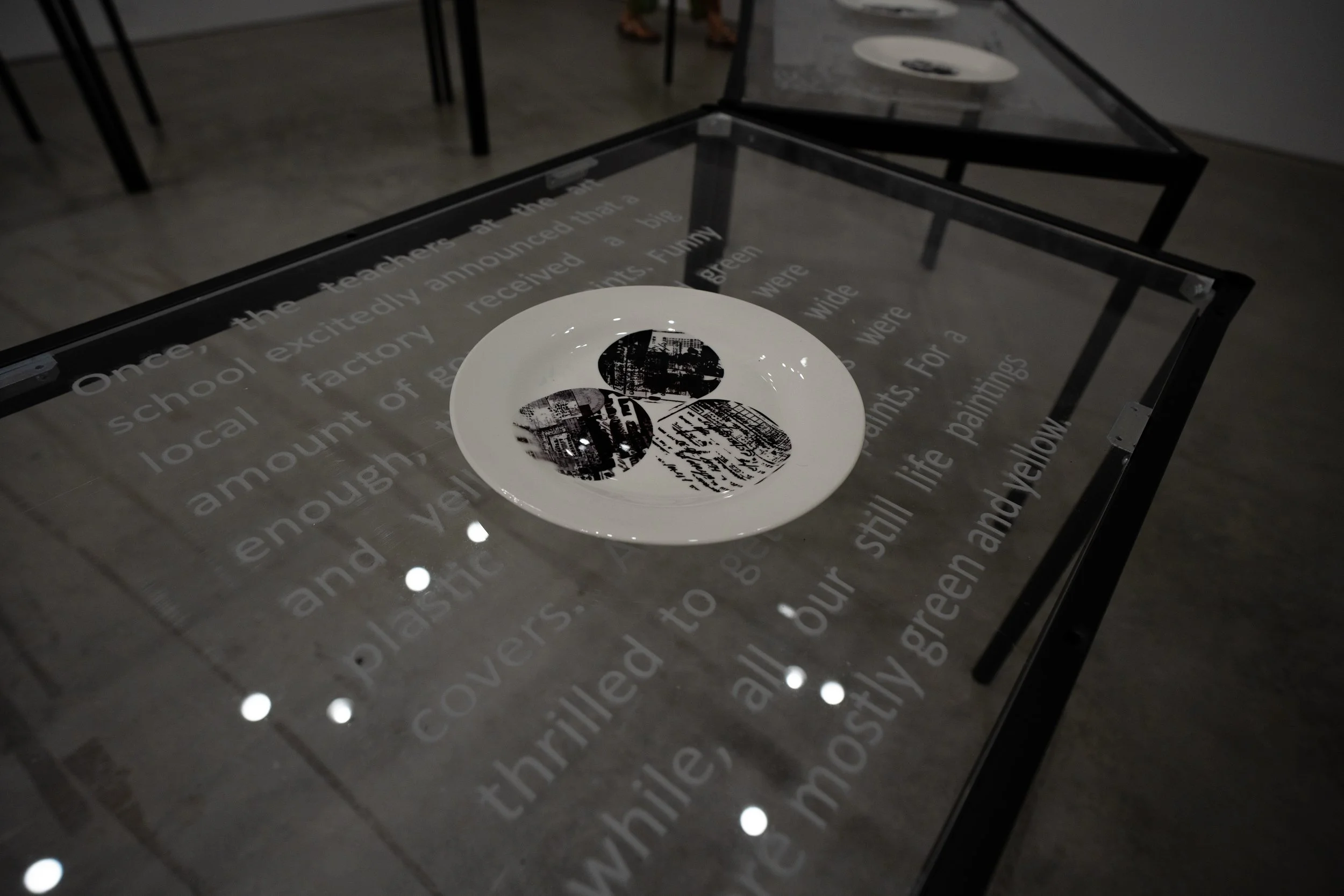
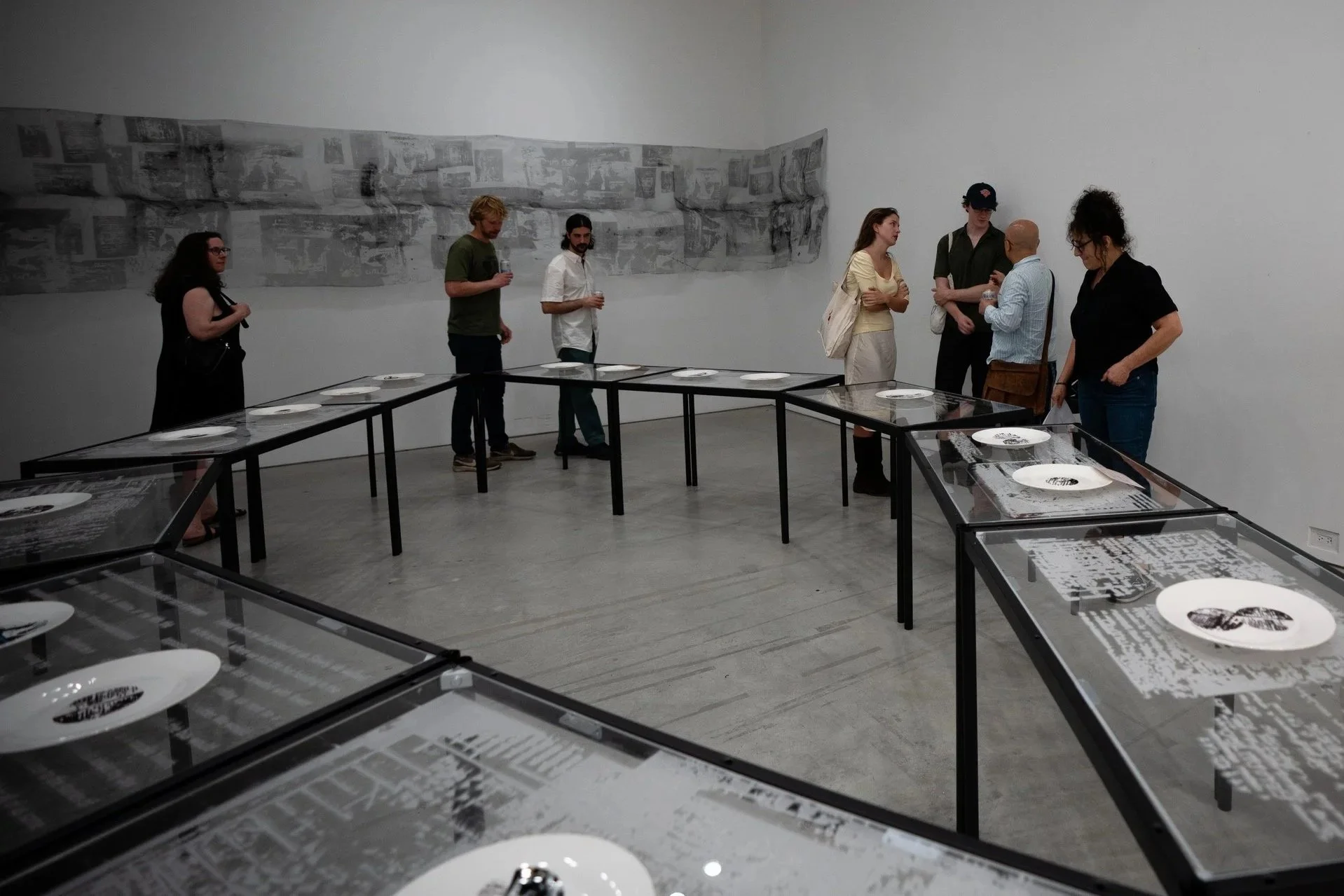
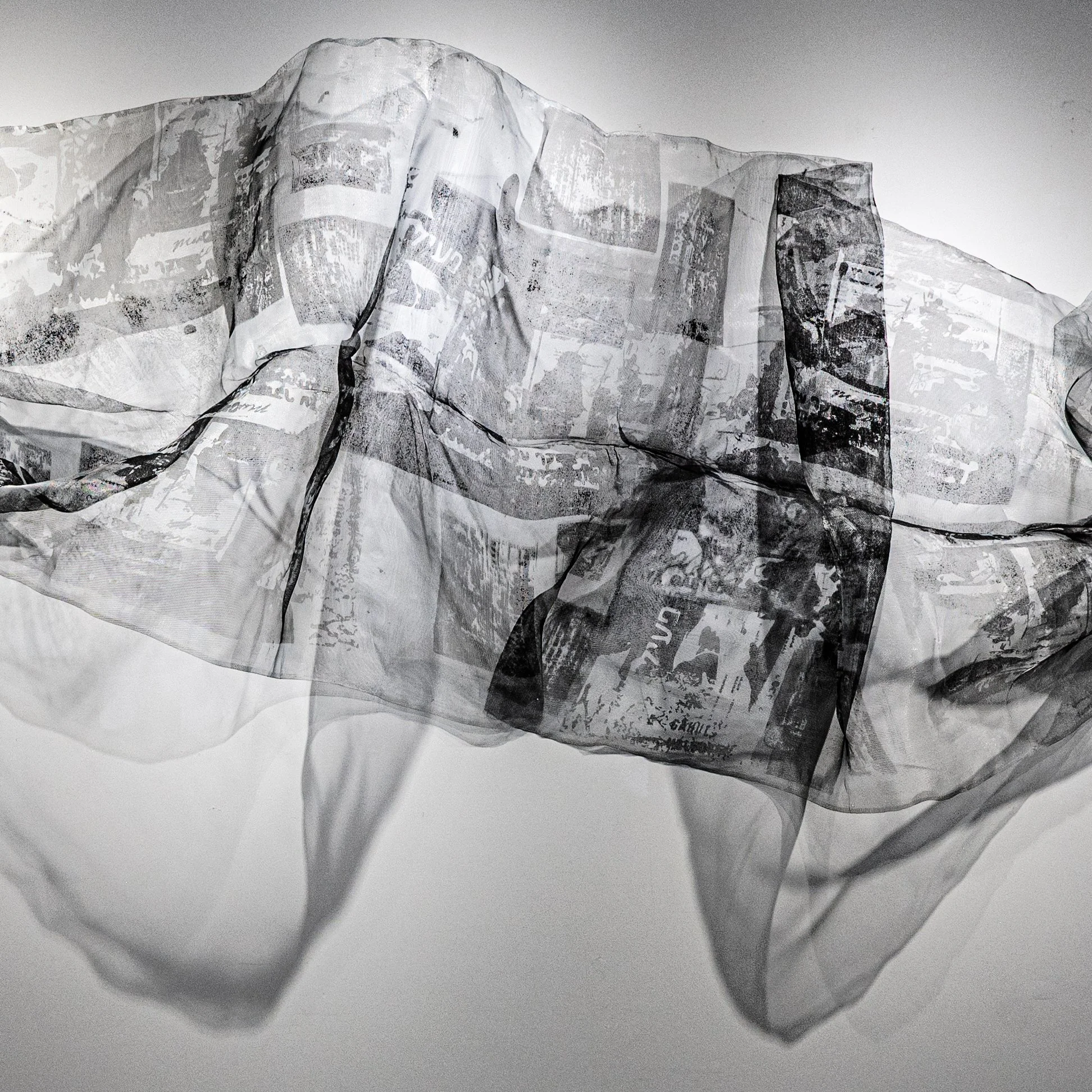
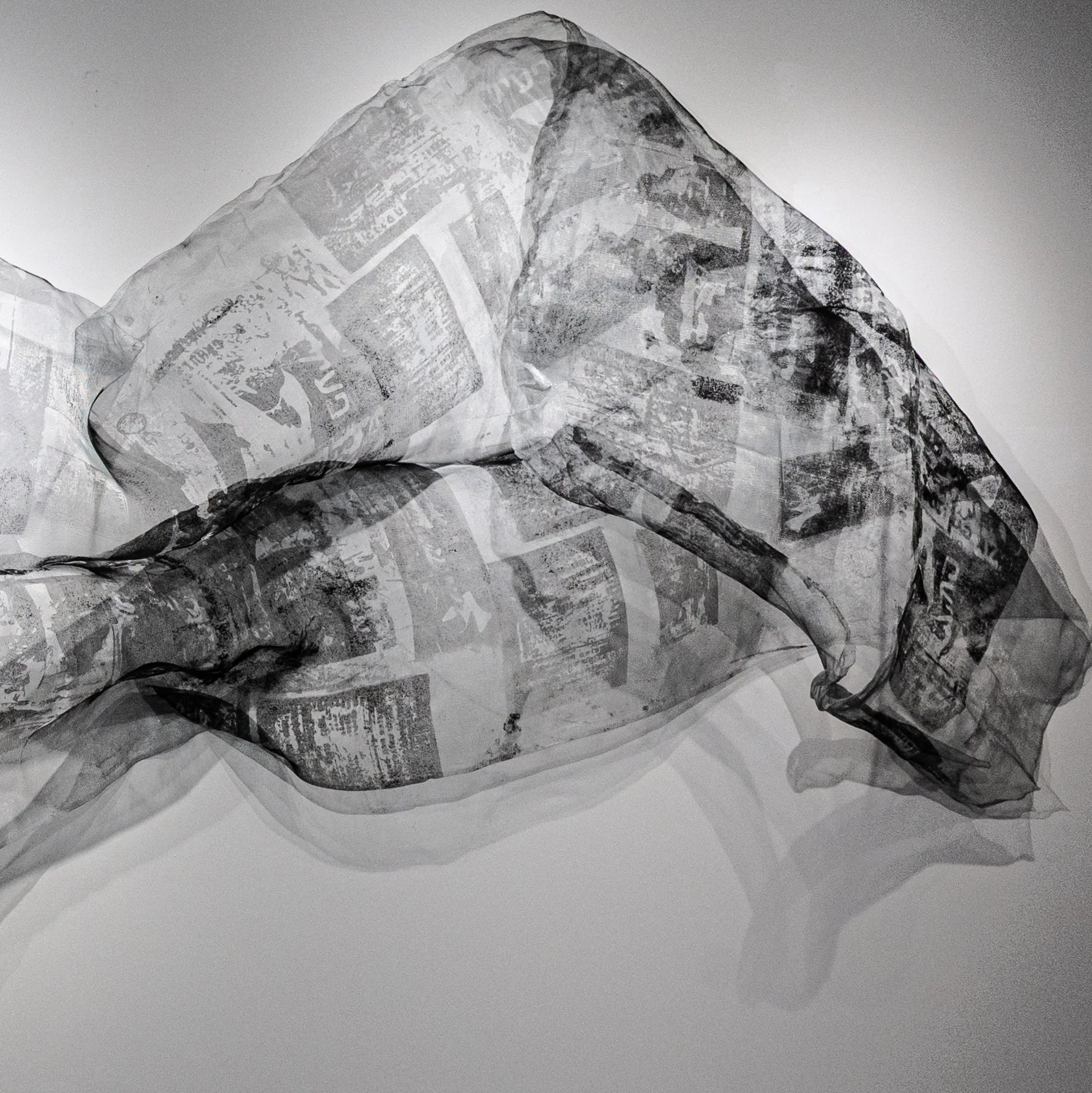
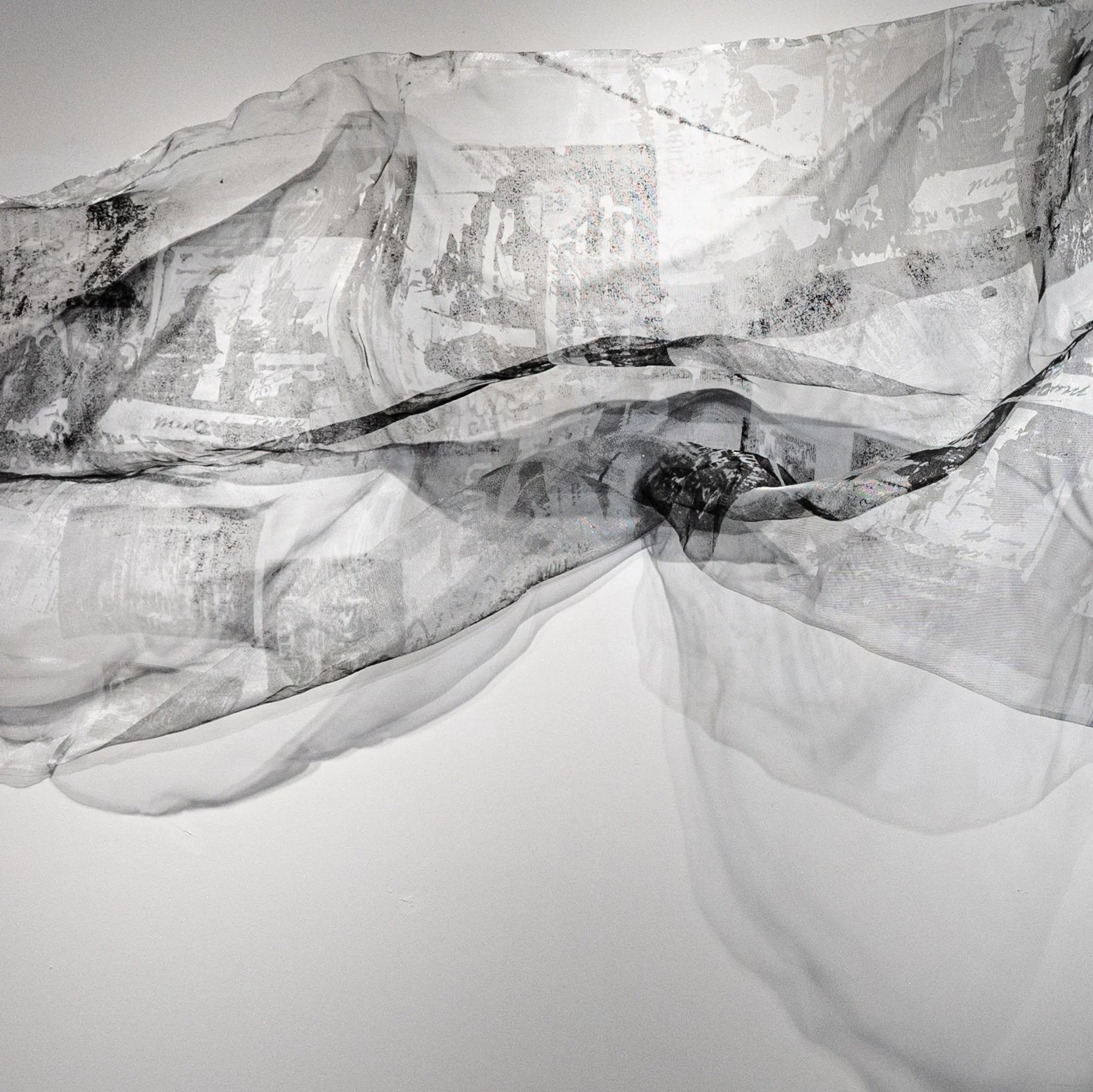
The Dinner of Sublimation centers on a large handmade plexiglass table set for sixteen guests — a sculpture etched with official documents drawn from the artist's familial archive, their forms intentionally abstracted until they become at once illegible and universal, relating to multiple histories and communities at once.
The table functions simultaneously as sculpture, archive, stage, and social space. The layered documents on its surface speak to the bureaucratic language overpowering and flatten lived and personal experience. The etched surface of the table also has elements of the nonfiction personal essay written in a hermit crab format - an organism that survives by inhabiting abandoned shells. This metaphor operates structurally within the installation: The table becomes a shell. The guests temporarily inhabit it.
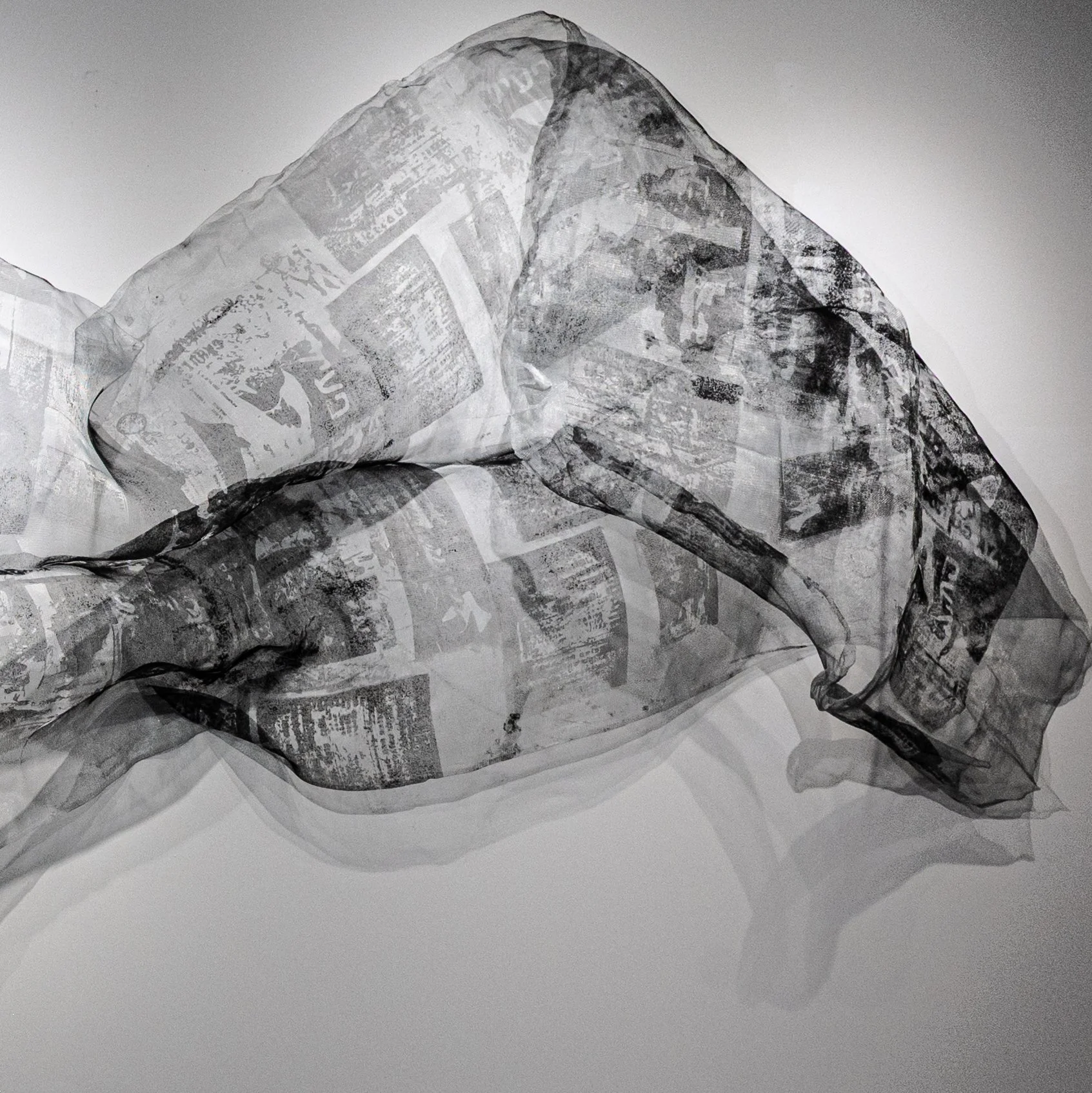
A window screen is presented as an additional sculptural element on the wall, extending the installation's logic into the surrounding space. Like the table, it is an ordinary household object transformed into something structural: a surface that filters, separates, and mediates. Together, the table and screen propose the home as a site of both refuge and regulation, where borders are felt most intimately. A window screen extends the work into the surrounding space, introducing themes of filtration and borders. Together, these elements construct a spatial condition in which viewers encounter identity as something unstable, layered, and continually negotiated.
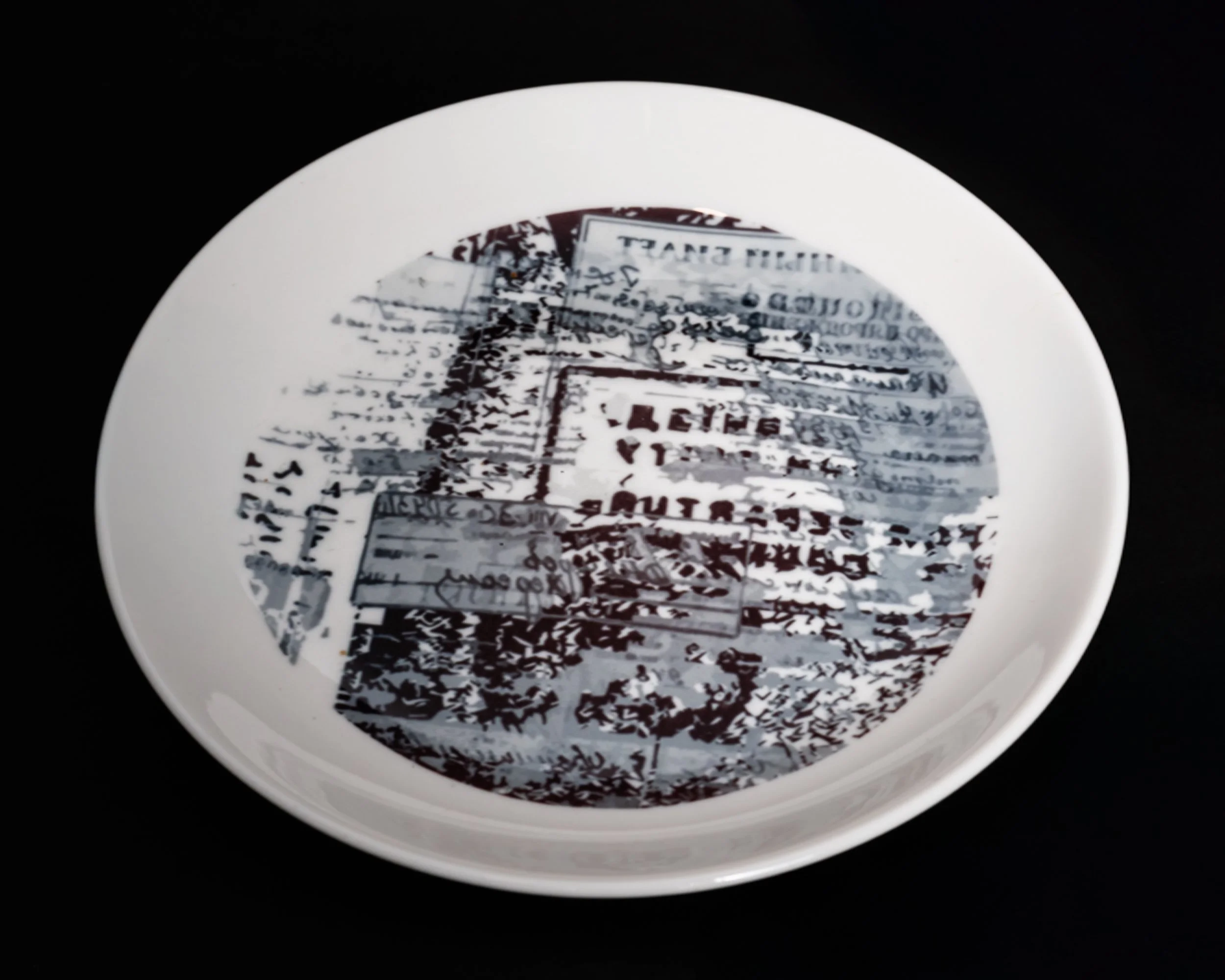
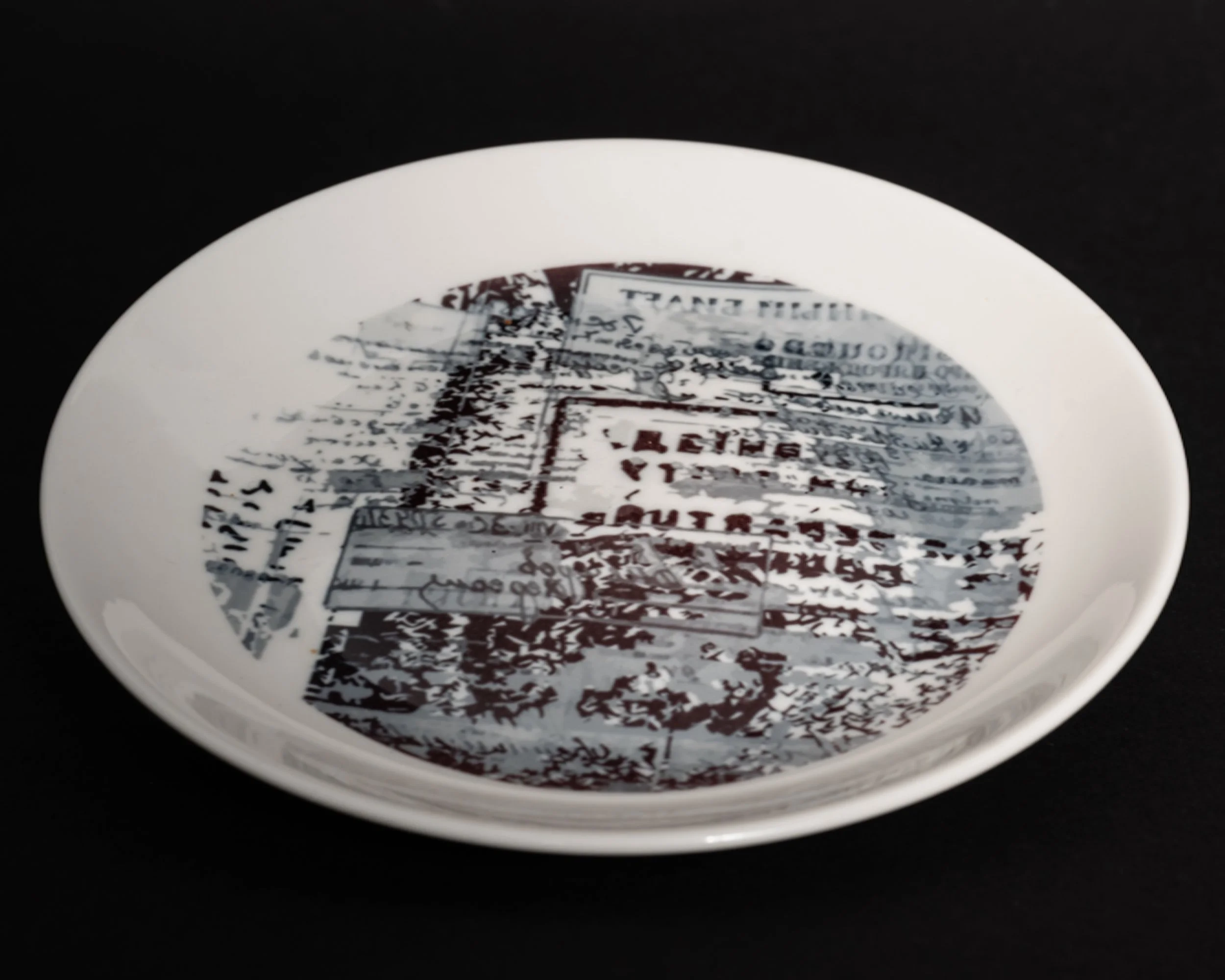
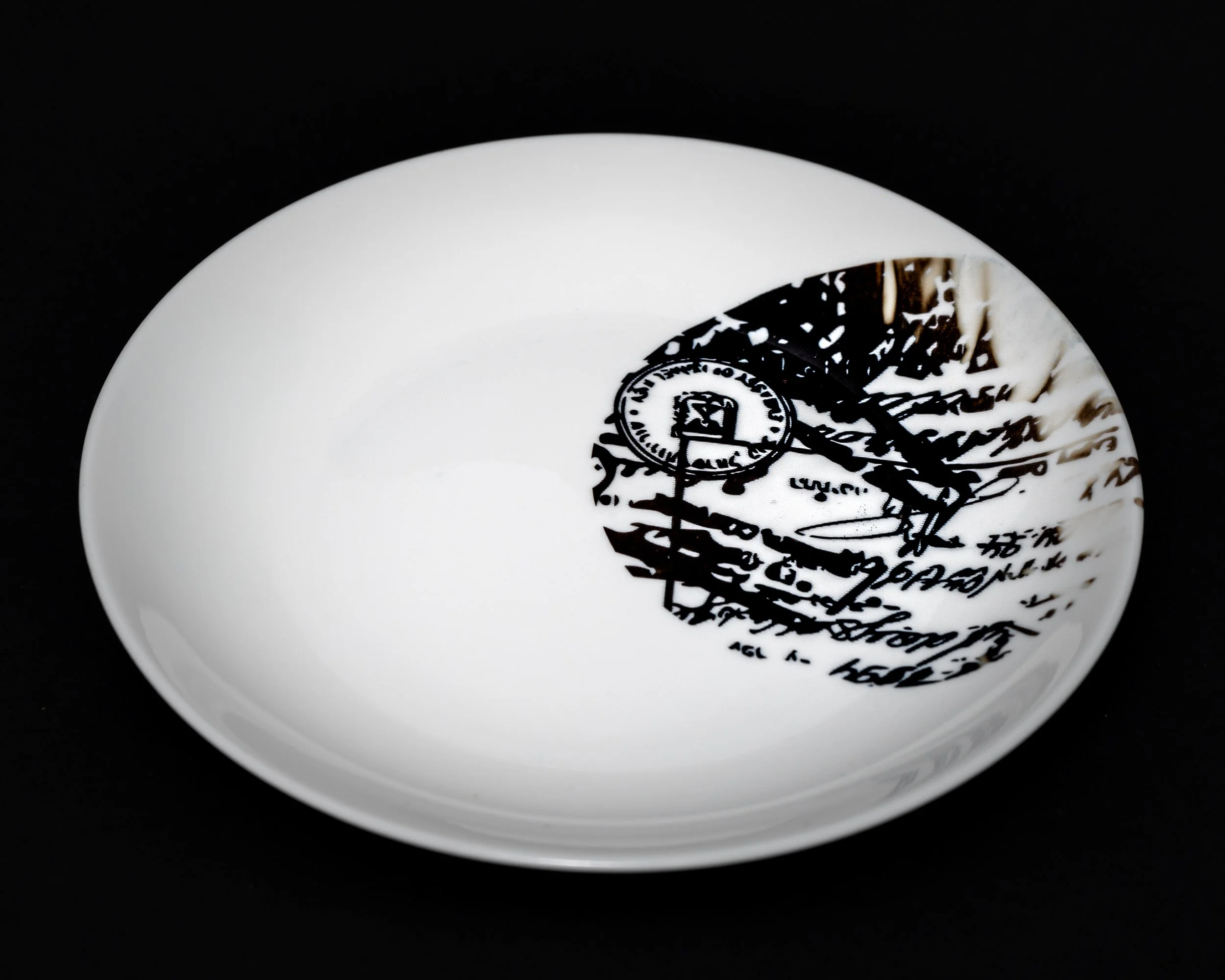
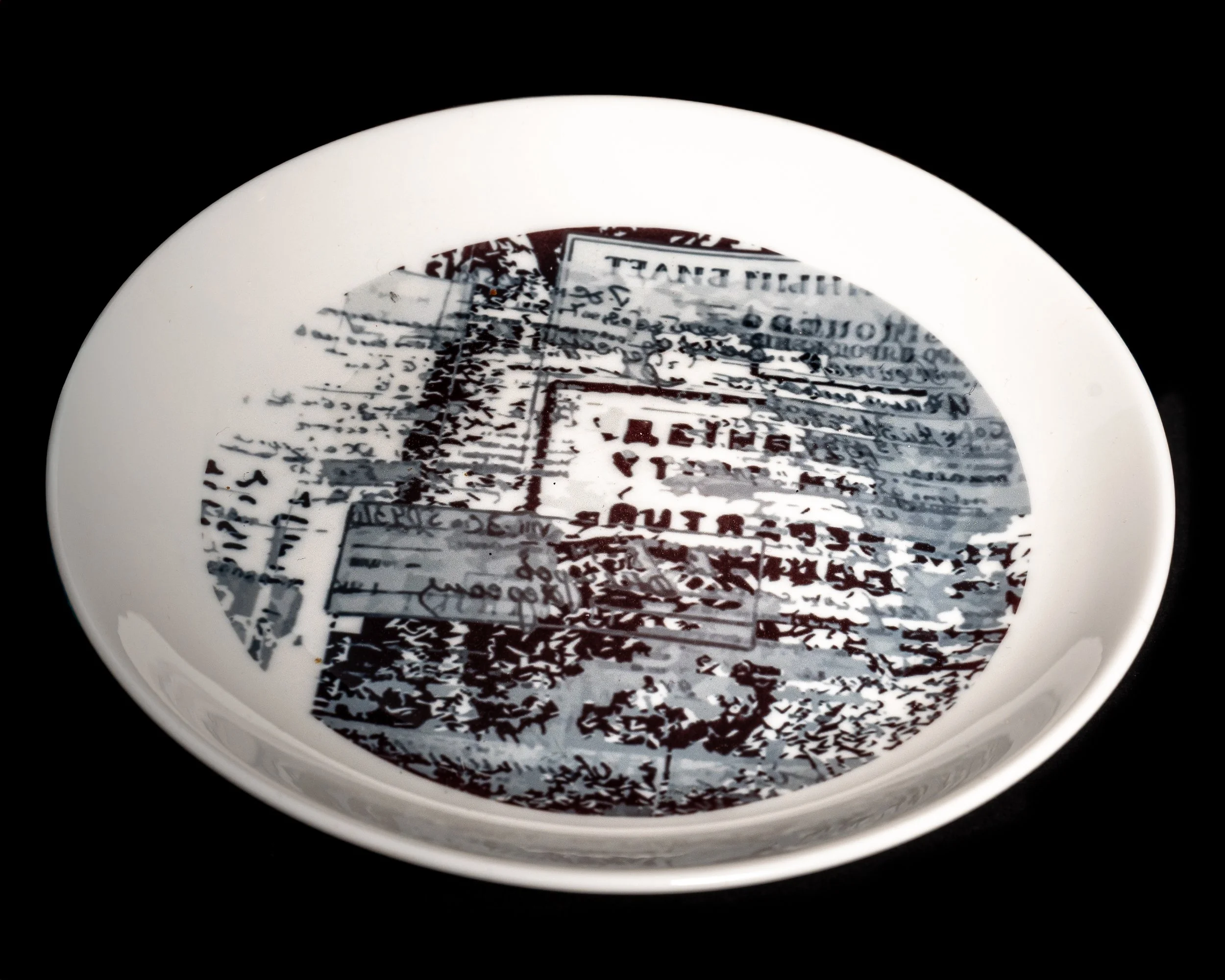
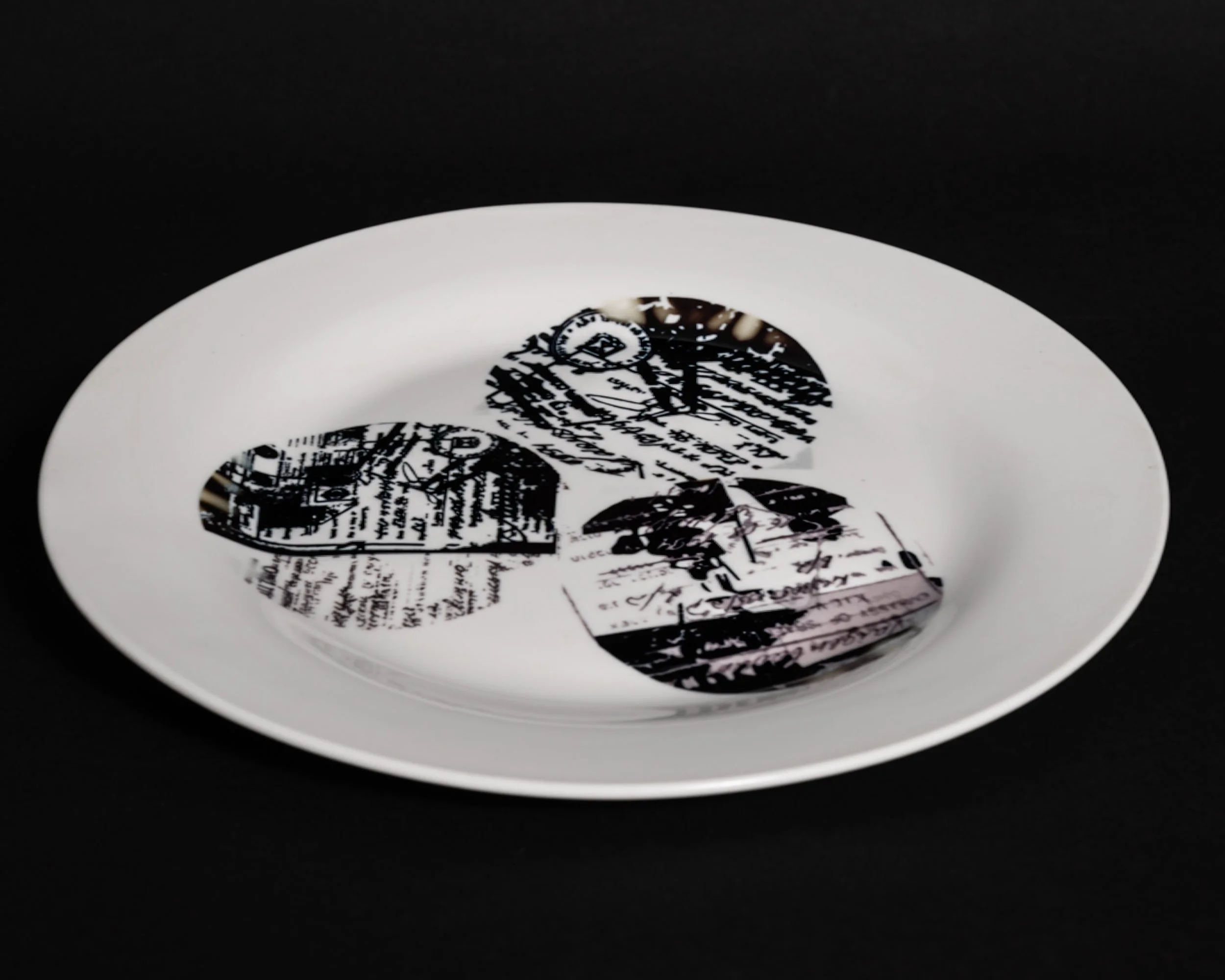
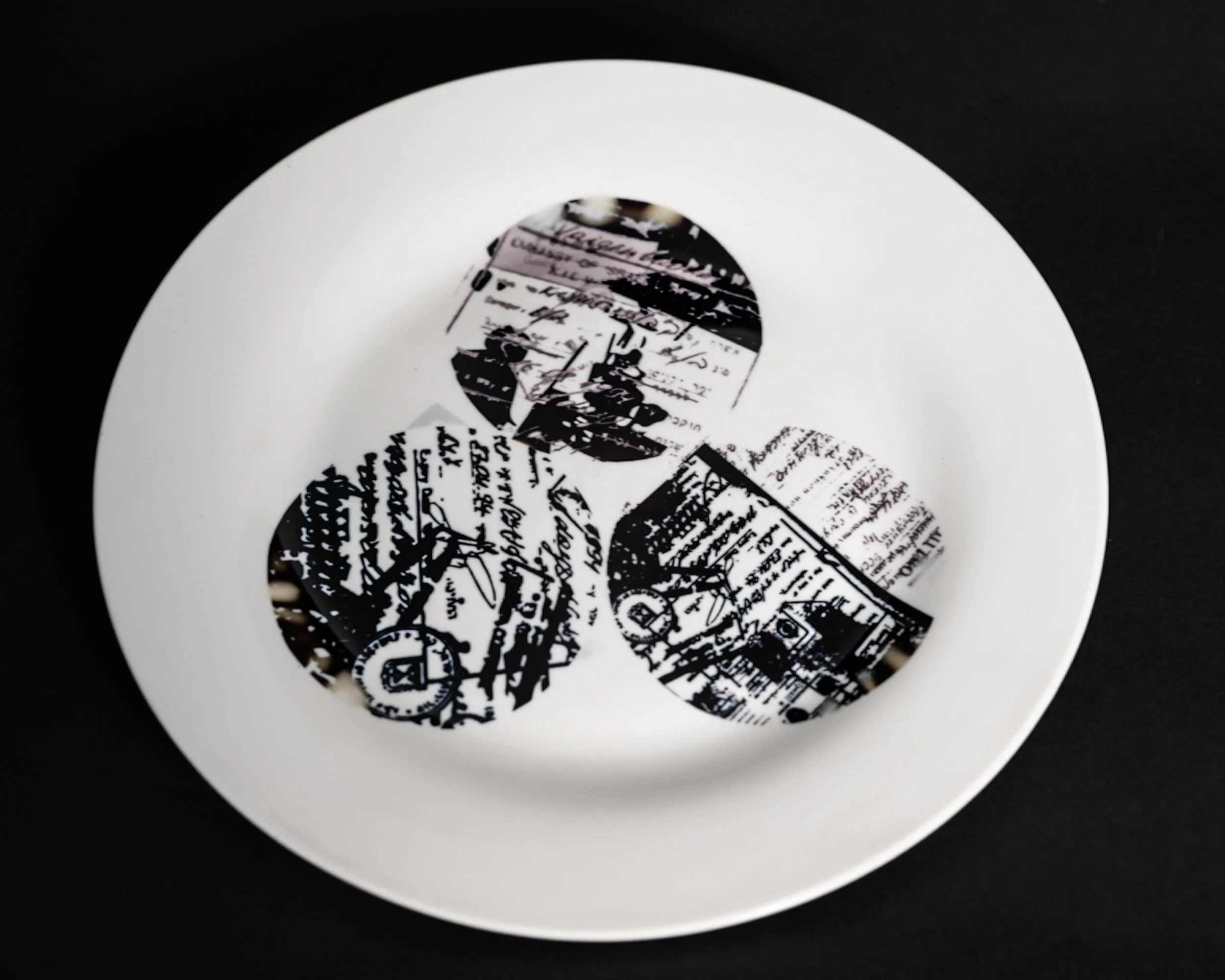
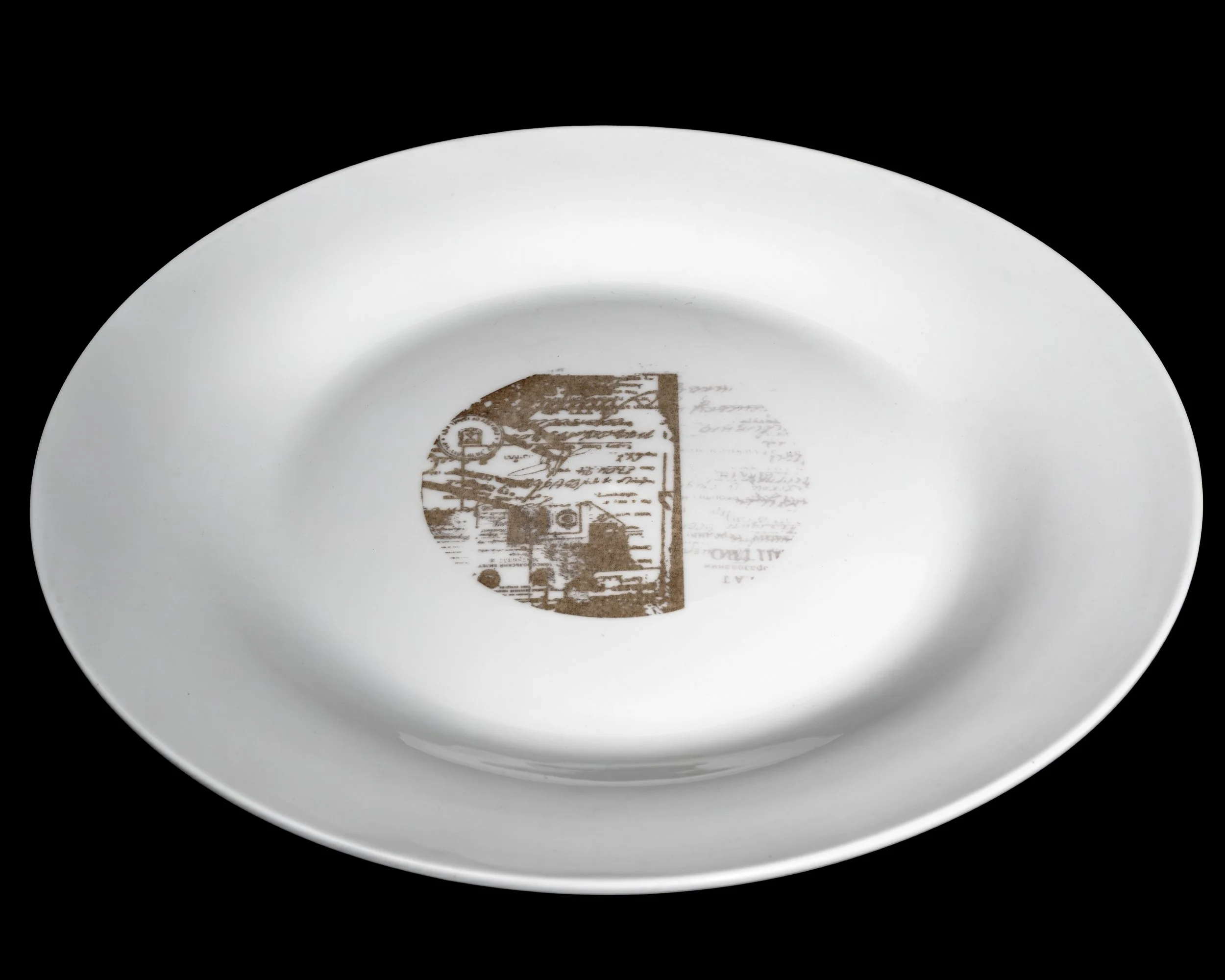
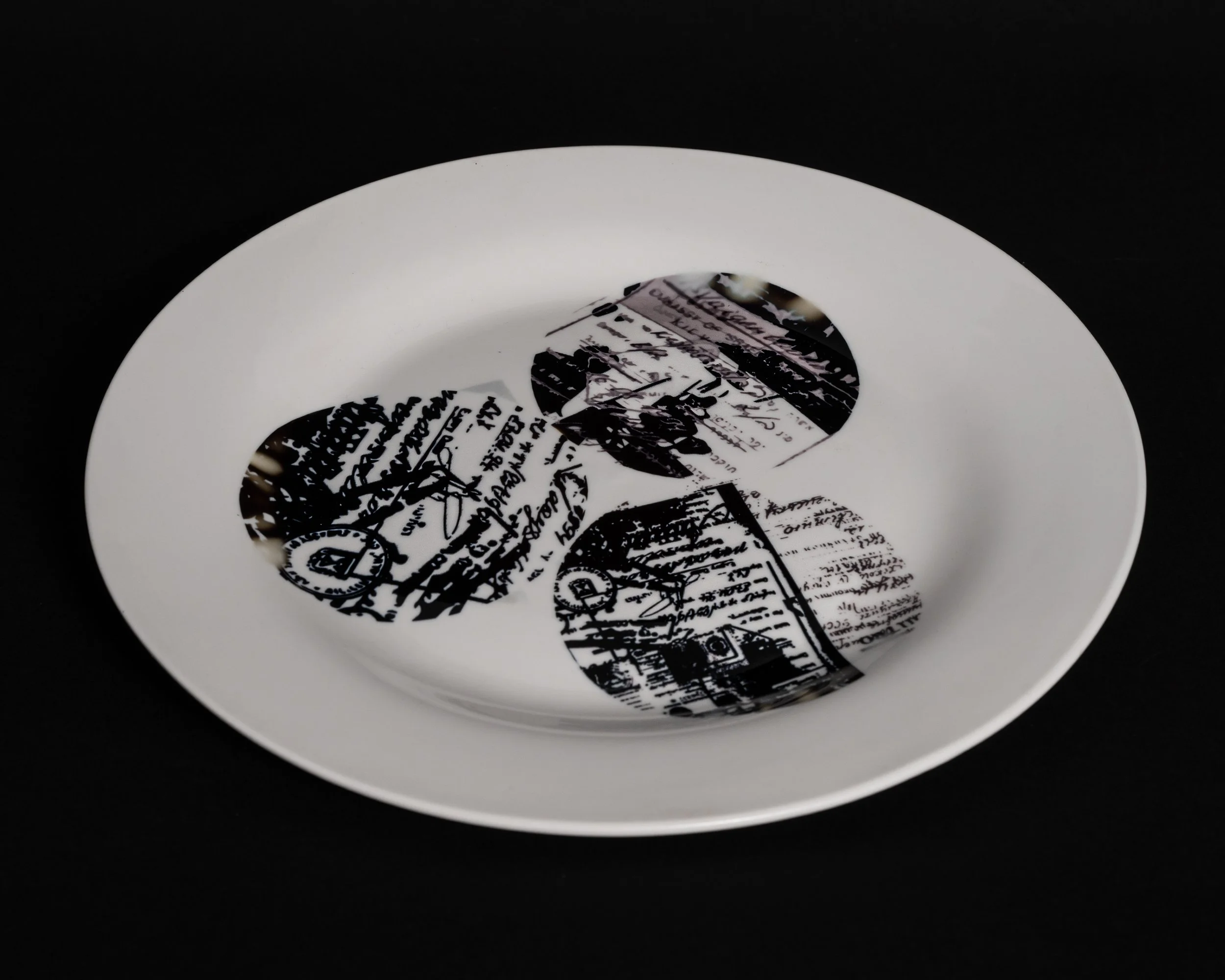
The table is set for sixteen people. The number operates as a structural and conceptual tool: in North America, sixteen marks the "sweet sixteen," a coming-of-age threshold; in many places it signals legal milestones such as consent or the right to drive. These are the ages at which institutions begin to formally recognize — and regulate — the individual. The place settings include fully functional sublimated plates, reinforcing the table's dual role as both sculpture and site of gathering. Sublimation operates on two registers: as a heat-transfer process that permanently bonds image to surface, and as a metaphor for the way personal and familial memory is absorbed, transformed, and preserved within cultural and administrative form.
The blank recipe cards in the space offer the participatory element of the installation, where the guests are invited to share recipes; both real and the conceptual ones that connect to the hermit crab essay etched on the table.
The installation joins a lineage in which the table functions as monument, archive, and social space — a tradition shaped in part by Judy Chicago's The Dinner Party (1979), which reimagined the table as a site of collective memory and historical visibility. The Dinner of Sublimation extends this thinking into the terrain of migration and document, asking how personal histories survive — and are altered by — their passage through official systems.
SUBMIT RECIPE
I’m gathering open-call recipe submissions centered on identity to feature on the exhibition page.
You’re invited to contribute either a real dish you’d like to share or a conceptual recipe. The goal is to build an interactive virtual library that explores how different ingredients—literal or symbolic—can come together to create a dish or an idea.
To participate, simply upload your recipe by filling out the form. By doing so, you’ll become part of the exhibition, and your submission will join a global collection of recipes from contributors around the world. Feel free to share the link with friends or anyone who might like to contribute their own recipe.
Consent & Use of Submissions
By submitting your recipe, you confirm that the content is your own or that you have permission to share it. You grant permission for your submission (including text and any accompanying images) to be displayed, reproduced, and shared as part of this exhibition and its related materials (such as websites, publications, and promotional content). If you include your name or other identifying information, you consent to it being published alongside your submission. If you prefer to remain anonymous, you may indicate that in the form.